Arsenal vs Bayern Munich: Arteta Updates Havertz, Ødegaard Injuries Ahead of Champions League Showdown
 Nov, 26 2025
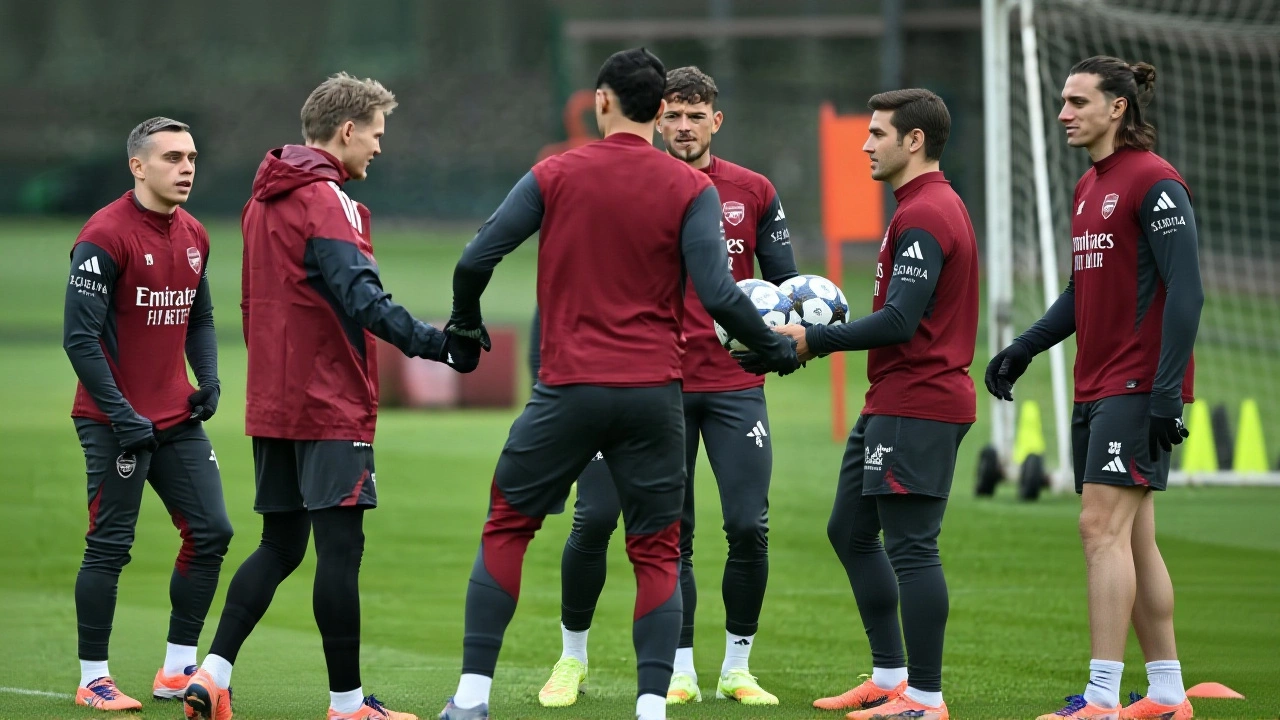
When Mikel Arteta stepped to the podium at London Colney on Monday, November 25, 2025, the air in the room wasn’t just thick with press questions—it was charged with the kind of tension only a Champions League clash between two European giants can create. Arsenal, unbeaten in the league phase with zero goals conceded, were about to host Bayern Munich at Emirates Stadium, and the stakes couldn’t be higher. Arteta didn’t sugarcoat it: "A lot of clubs around Europe will probably view Arsenal as the toughest challenge in European football just now." But he knew the real test was still ahead.
The Injury Puzzle: Who’s In, Who’s Out?
The biggest talking point wasn’t tactics—it was availability. Arteta confirmed that Kai Havertz, the 26-year-old German playmaker, and Viktor Gyökeres, the 26-year-old Swedish striker, are still in the six-to-eight-week recovery window from their respective muscle injuries. "We are still waiting to see Kai and Viktor together in the squad," Arteta said, his tone careful but not dismissive. That means neither will start, and their return remains uncertain even for the following Premier League clash with Chelsea FC.Gabriel Jesus, the 28-year-old Brazilian forward, is also sidelined with a similar timeline, leaving Arteta to rotate Mikel Merino and Jude Bellingham (on loan from Real Madrid) in advanced roles. Even Gabriel Magalhaes, the 27-year-old Brazilian center-back, is nursing a nagging adductor strain—enough to keep him on the bench, possibly for the first time this season.
But the real glimmer of hope? Martin Ødegaard. The 26-year-old Norwegian captain, who hasn’t played since early October after a hamstring tear, is "edging closer to a return," according to Arteta. Not quite match-fit, but back in full training. "He’s been working hard," Arteta added. "If he’s ready, he’ll be on the bench. If he’s not, he’ll be on the pitch by the next one." That’s the kind of cautious optimism Arsenal fans have learned to cherish.
Bayern’s Machine vs Arsenal’s Fortress
Bayern Munich arrive in London as Bundesliga leaders, unbeaten in 18 matches across all competitions. Their attacking trio—Harry Kane, Sadio Mané, and Jamal Musiala—have combined for 42 goals this season. And yet, Arteta refused to play into fear. "I would not use the word 'fear'", he said, pausing for effect. "I admire what he has done. Remarkable consistency for club and country. That’s what you build your career on."Meanwhile, Arsenal’s defense has been a revelation. No goals conceded in four Champions League matches. Zero. That’s not luck—it’s structure. Arteta credited the defensive cohesion built over the last four or five years, a slow, deliberate rebuild. "You can’t fix a spine in one or two windows," he said. "It’s about players complementing each other. That’s what we’ve done."
Arteta also highlighted the emotional power of the Emirates Stadium. "The atmosphere here is a massive superpower," he said. "We’ve seen it against Manchester City, against Liverpool. When the crowd is like that, it’s not just noise—it’s pressure. And it’s ours."
The Grind: Three Big Games in Six Days
This isn’t just one match. It’s a gauntlet. After Bayern, Arsenal face Chelsea FC on Saturday, then Tottenham Hotspur again in the FA Cup third round on Tuesday. "It’s a brutal run," Arteta admitted. "We have to manage minutes. We have to rotate intelligently. We can’t afford to burn out."That’s why Merino’s versatility has been so vital. The 29-year-old Spanish midfielder, normally a deep-lying playmaker, has been deployed as a false nine in the last two games—scoring once, assisting twice, and maintaining defensive shape. "He’s been exceptional," Arteta said. "That’s the kind of player you build a team around."
Arteta also referenced his working relationship with Gabriel Heinze, Bayern’s assistant coach and former Manchester United defender. "I’ve worked with Gabriel for years," he said. "He’s a great coach. We respect each other. But tomorrow, it’s all about the players on the pitch."
What’s at Stake Beyond the Scoreline?
This isn’t just about points. It’s about identity. Arsenal haven’t won the Champions League since 2006. Bayern and Real Madrid have set the standard. But Arteta believes this squad—this version of Arsenal—is different. Younger. Hungrier. More complete. "We lost some very important players in that knockout stage," he said, referring to the 2022-23 campaign. "And now? We’ve rebuilt. We’re different. And we’re ready to win this time."It’s a quiet confidence. Not arrogance. Not bravado. Just belief. And it’s growing.
Expert Take: What Charles Watts Heard
Independent journalist and Inside Arsenal podcast host Charles Watts broke down Arteta’s comments in Episode 229, released the same day. "The Ødegaard update is the most significant," Watts said. "If he’s fit for the bench, it changes everything. He’s the heartbeat of this team. Without him, Arsenal are good. With him? They’re dangerous."Watts also noted Arteta’s subtle shift in tone. "He didn’t say ‘we’re ready to beat Bayern.’ He said ‘we’re ready to win this time.’ That’s a subtle but huge difference. It implies history is on the line."
And for the first time in years, Arsenal fans are starting to believe it might be.
Frequently Asked Questions
Will Martin Ødegaard play against Bayern Munich?
Arteta confirmed Ødegaard is "edging closer to a return" but won’t start. He’s likely to be on the bench, with a possible 20-30 minute cameo depending on how the game unfolds. His presence alone lifts the team’s tempo and decision-making—something Arsenal badly need against Bayern’s high press.
Why are Havertz and Gyökeres still out?
Both players suffered muscle injuries in late September and early October, with estimated recovery times of six to eight weeks. Havertz’s is a groin strain, Gyökeres’ a calf tear. Arteta won’t risk them returning too early, especially with a congested schedule. Their absence forces Arsenal to rely on Merino and Bellingham in advanced roles.
How has Arsenal managed to keep a clean sheet in all Champions League games?
Arteta’s system prioritizes compactness and midfield control. The back four, led by Magalhaes and Saliba, rarely get isolated. The fullbacks tuck in, and midfielders like Ødegaard and Rice drop deep to overload the center. It’s not just defense—it’s possession as a defensive tool. They’ve conceded zero goals in 4 matches, the only team in the league phase to do so.
Is Harry Kane really the biggest threat?
Kane is dangerous—19 goals this season—but Arsenal’s focus is on disrupting the entire system. Musiala’s dribbling, Mané’s pace, and the movement of Müller and Goretzka create more space than Kane alone. Arteta’s plan is to cut passing lanes to the box, not just mark Kane. He’s not feared—he’s respected.
What happens if Arsenal lose this match?
A loss doesn’t eliminate them—they’re still top of the group—but it would dent their momentum heading into the Chelsea and Spurs games. More importantly, it would reinforce the narrative that Arsenal still can’t win the big one. Arteta knows this is the moment to prove they’re no longer just contenders—they’re challengers.
Why is the Emirates Stadium atmosphere so important?
Arsenal’s home crowd has become one of the most vocal in Europe this season, thanks to targeted fan engagement initiatives and a winning streak. The noise disrupts Bayern’s rhythm, especially in transition. Arteta calls it a "superpower" because it’s not just emotion—it’s tactical. Opponents have admitted it affects their passing accuracy and decision-making under pressure.